If you own a Nintendo Switch, you probably think of it as a family-friendly console loaded with Mario and Zelda games. But here’s what most casual players miss: the Switch has evolved into one of the best platforms for horror gaming. Whether you’re into survival horror, psychological mind-benders, or indie scares on a budget, the horror games on Switch deliver genuine chills and dread in a portable package. The library has exploded over the past few years, mixing big-name franchises with hidden gems that rival their console counterparts. We’ve tested the major titles, sorted through the eShop’s endless catalog, and put together the definitive guide to the best horror games for Switch that actually belong on your system.
Key Takeaways
- Horror games on Switch prove that atmospheric design and pacing matter more than cutting-edge graphics, making portability and accessibility key strengths for the genre.
- AAA survival horror titles like Resident Evil 4 and Dead Space deliver visceral, immersive experiences on Switch with steady 30 FPS performance and responsive controls that hold up in handheld and docked modes.
- Psychological horror games such as Amnesia and SOMA create lasting dread through narrative and atmosphere rather than jump scares, proving that story-driven experiences thrive on the platform.
- The Switch eShop offers abundant budget-friendly horror gems under $15, including indie masterpieces like Darkwood and Yomawari that rival AAA productions in atmosphere and creativity.
- Optimizing your horror gaming experience requires the right environment—headphones, dim lighting, notifications disabled, and the Pro Controller for extended sessions—to maximize immersion and impact.
- Cooperative horror games like Resident Evil 5 and Dying Light prove that multiplayer experiences amplify tension, allowing you to share scares and strategic challenges with friends on Switch.
Why Nintendo Switch Is A Premier Platform For Horror Gaming
Most people assume that horror games need high-end graphics and cutting-edge processing power to be effective. That’s not entirely wrong, but it misses the point. The Nintendo Switch’s strength lies in portability and accessibility, you can experience genuine horror moments on your commute, at home, or anywhere else. What makes the best horror games on Switch work is atmosphere and pacing, not just visual fidelity.
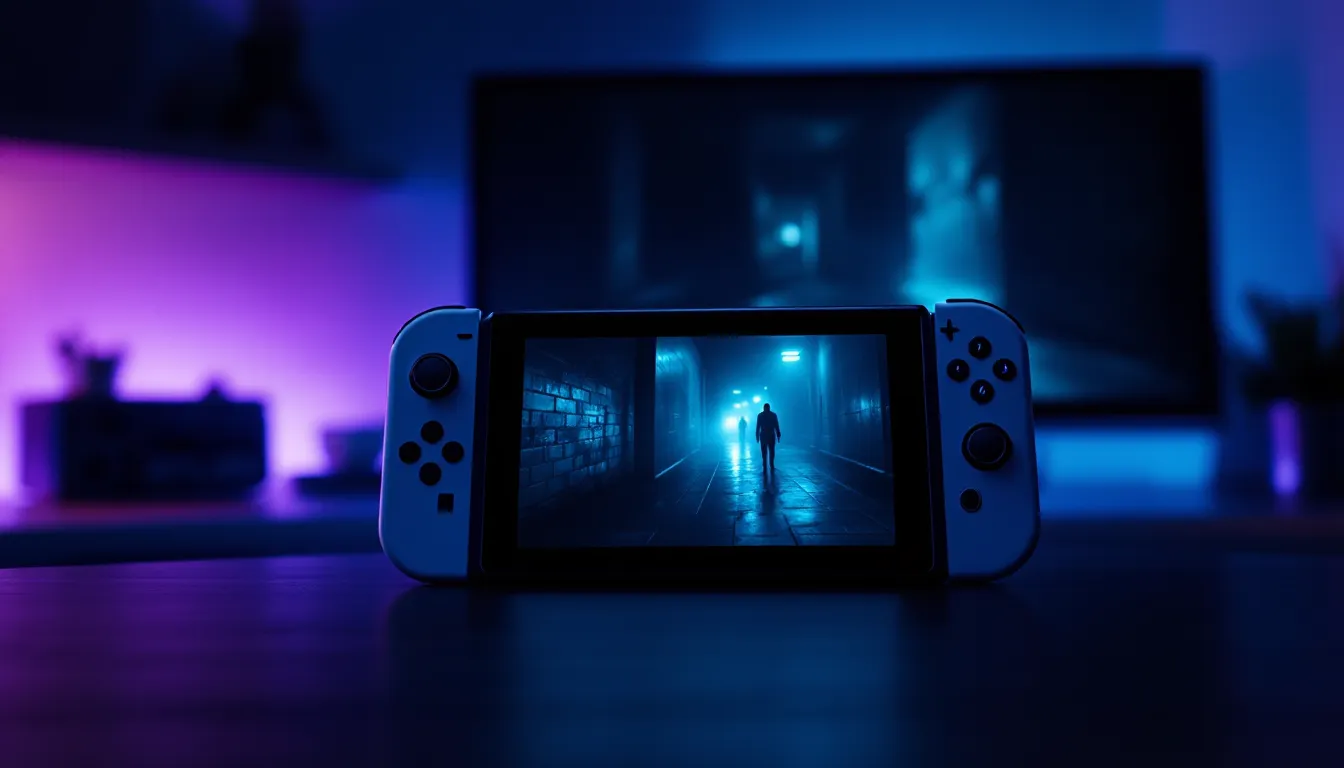
The Switch’s hybrid design actually creates a unique advantage for horror. Handheld mode adds intimacy to scary moments: the smaller screen forces your attention inward. TV mode lets you crank up the sound and immersion. Games like Resident Evil and Dead Space leverage the console’s capabilities smartly, delivering graphics that hold up and performance that doesn’t tank during intense sequences.
Developer support has been crucial too. Major publishers now prioritize Switch ports because the install base justifies the effort. Indies, meanwhile, have made Switch horror their playground, smaller file sizes and the ability to experiment mean the platform attracts creative risk-takers. The result: horror games for Nintendo Switch now span every subgenre you can imagine, from survival horror classics to artistic psychological experiments.
Survival Horror Masterpieces You Can’t Miss
Resident Evil Series On Switch
The Resident Evil series on Switch represents the gold standard for how to port AAA survival horror to Nintendo’s hardware. Resident Evil 4 (Switch version, 2019) remains the standout achievement. The game runs at 30 FPS docked and 20 FPS handheld, which sounds rough on paper, but the streamlined controls and locked perspective mean performance feels smooth during actual gameplay. The adaptive triggers on Joy-Cons capture the tension of aiming and firing weapons, making encounters with armored ganados feel more visceral than they have any right to on portable hardware.
If you’ve never played RE4, the premise is straightforward: you’re Agent Leon Kennedy, thrust into a Spanish village where residents are infected with a parasite. The game nails the survival horror formula, limited ammo, resource management, and an escalating sense of dread. The Switch version includes all the content of modern versions but loses some graphical polish. That trade-off is absolutely worth it for the flexibility of playing one of gaming’s most influential horror titles anywhere.
Resident Evil 5 and Resident Evil 6 also landed on Switch, though both shift toward action-horror. RE5 is still worth playing for its co-op campaign and familiar mechanics, while RE6 is bloated and less essential. Resident Evil Village (2022) surprised many by coming to Switch, though performance concessions are more noticeable, 30 FPS in performance mode, more stuttering during intense combat. The game’s shorter playtime compared to RE5 helps mitigate these issues, and Lady Dimitrescu is as intimidating at 1080p as she is on high-end platforms.
Dead Space Remake And Its Switch Performance
Dead Space (2023 Remake on Switch, 2024 release) represents the latest in survival horror ports and proves the Switch can handle visceral, fast-paced horror. Unlike the original PS3/Xbox 360 version with its over-the-shoulder camera, the remake keeps the fixed isometric perspective but modernizes the graphics and controls. On Switch, the remake runs at 1080p docked and 720p handheld, maintaining a steady 30 FPS. That’s important because Dead Space demands responsive aiming, you’re limb-targeting necromorphs in zero gravity, and input lag could ruin the experience.
The horror in Dead Space is creature-based and visceral. Necromorphs (dead crew members twisted into grotesque monsters) hunt you through a derelict mining ship. Ammo scarcity forces you to make every shot count, and you’ll frequently find yourself running from overwhelming odds. The sound design carries half the horror: the alien shrieks and metallic groans of the USG Ishimura create dread between firefights.
Switch controls feel native. The Joy-Con rumble provides feedback when firing the Plasma Cutter or Ripper, and the gyro aiming option makes precision shots manageable even at lower resolution. Performance dips during heavy action sequences, but the game’s pacing (brief cutscenes, frequent resource pickups) breaks combat into digestible chunks, preventing the performance from feeling like a dealbreaker.
Psychological Horror That Messes With Your Mind
Story-Driven Atmospheric Horrors
Some of the best horror games on Switch don’t rely on jump scares or combat. Instead, they build dread through atmosphere, narrative, and the power of what you don’t see. Amnesia: The Dark Descent set the standard for this approach years ago, and the Switch version (2020) proves the formula still works. You’re an amnesiac wandering a sprawling castle with no weapons, no way to fight back. Your only defense is hiding, running, and solving environmental puzzles while piecing together what happened to you.
The genius of Amnesia is that the monster (the Shadow) gets scarier the longer you hide from it because your imagination fills in the gaps. On Switch, the lower resolution actually helps, less visual clarity means less visual confirmation of threats, keeping your brain in overdrive. The game runs at 30 FPS and holds steady, making the experience tense rather than frustrating.
SOMA (2015, ported to Switch in 2019) is even more cerebral. It’s set on a deep-sea research facility, and the core horror is existential. You’re an AI consciousness trapped in a robot body, forced to confront questions about identity and consciousness while evading aquatic horrors. There’s no combat, only stealth and puzzle-solving. The writing is exceptional, and the story builds to a gut-punch finale that stays with you long after the credits roll. Performance on Switch is solid at 30 FPS docked, though it drops during visually complex underwater sequences.
The Shining Project and similar lesser-known narrative horror games prove Switch developers understand that story and atmosphere often trump graphics. These games prioritize writing and world-building, and the Switch’s portability means you can experience them in long, immersive sessions.
For fans seeking something more recent, AI: The Somnium Files blends visual novel storytelling with detective work and existential horror themes. The narrative-heavy approach means pacing feels intentional, and the Switch version maintains the same visual clarity as the original release.
Indie Horror Gems Worth Your Time And Money
Underground Favorites That Deserve Recognition
Indie developers have essentially claimed the Switch as horror’s experimental playground. Dread Nautical is a top-down roguelike where you’re trapped on a haunted cruise ship, building defenses against waves of supernatural enemies. It’s not groundbreaking mechanically, but the atmosphere is stellar, and the roguelike structure keeps it fresh across multiple playthroughs. Performance is rock-solid at 60 FPS, making it perfect for longer horror sessions.
Darkwood (2019 Switch port) stands as one of the most unsettling indie horrors ever made. It’s a top-down survival game set in a mysterious Eastern European forest. You scavenge for supplies during the day, then barricade yourself in a cabin at night while things outside try to get in. There’s no combat, only defense, exploration, and the constant creeping sense that you’re being hunted. The pixel art and limited visibility create genuine tension, and the game’s moral ambiguity (you never quite know what’s human or monster) amplifies the dread. It runs at 60 FPS handheld and maintains that performance docked.
Lake Ridden is a first-person walking simulator horror game that uses exploration and environmental storytelling instead of enemies. You’re lost in a Swedish forest, piecing together what happened to a missing girl. The forest itself becomes a character, beautiful but profoundly wrong. It’s a meditation on isolation and mystery rather than a traditional scare game, but horror games on Switch aren’t all jumpscares.
Oxenfree deserves mention as a supernatural mystery with teenage protagonists accidentally opening a ghostly rift. The real-time dialogue system and retro art style create a unique vibe, and the horror builds gradually as consequences unfold. Night Trap (2016 remake on Switch) is a cult classic FMV game where you defend a family against vampire attacks using security systems. It’s campy and B-movie in the best way, and it’s become a cult favorite on the platform.
Budget-Friendly Horror Options For Every Gamer
Not every horror experience needs to cost $40–$60. The Switch eShop is packed with sub-$15 horror gems that punch above their weight. Yomawari: Night Alone is a 2D exploration game where you’re a girl searching for your missing sister at night. It’s adorable in art style but deeply unsettling in atmosphere, a deceptive contrast that makes horror moments hit harder. Yomawari: Midnight Deluxe (the enhanced port) includes both the original and its sequel, offering hours of exploration and dread for under $10.
Detention (2017) is a Taiwanese indie horror game set in a creepy high school during martial law. It’s 2D, pixel-art, and story-heavy, with themes of political oppression woven into the scares. The atmosphere is suffocating, and it costs around $7–$9. Fobia St. Dinfna Hotel ($19.99) is a modern survival horror that brings back first-person perspectives and fixed camera angles reminiscent of classic Resident Evil. It’s not a AAA production, but the attention to detail in its haunted hotel setting proves that budget doesn’t define quality.
Spooky Swamp, Night Terror, and dozens of other eShop titles prove you can find horror experiences at every price point. Many of these games were made by single developers or small teams and still manage to deliver genuine scares or intriguing atmosphere. The key is filtering through the noise, user reviews on the eShop are usually reliable for identifying which games are worthwhile versus which are quick cash grabs.
Cooperative And Multiplayer Horror Experiences
Playing Scared With Friends
Horror is more intense when you’re experiencing it with someone else. Resident Evil 5 and Resident Evil 6 both feature co-op campaigns on Switch, letting you and a friend navigate danger together. RE5’s co-op is tight and responsive: the game actually balances encounters differently in single-player versus co-op, meaning you can’t just overpower enemies by doubling up. It’s a legitimate co-op horror experience, not an afterthought.
Dying Light (2024 Switch port) is a co-op action-horror game where you’re surviving in a zombie-infested city. Up to four players can team up, and the co-op focus actually shapes the experience, larger teams can attempt more ambitious objectives, but they also attract more undead. The game runs at 720p handheld and 1080p docked, maintaining playable 30 FPS even in four-player sessions. It’s more action-horror than pure survival horror, but the co-op component makes the undead feel genuinely threatening when hordes are closing in.
Going Under is a co-op dungeon crawler with comedic horror elements. It’s more lighthearted than the titles above, but it scratches the “scared with friends” itch in a different way, sharing moments of absurd danger and ridiculous combat. The Switch version supports local co-op and maintains solid performance in both TV and handheld modes.
For something more niche, Crawl is a local multiplayer horror-dungeon game where one player controls a human and the others control ghosts trying to possess and stop them. It’s competitive horror in disguise, and the frantic Joy-Con sharing makes it perfect for couch gaming sessions. Cooperative horror on Switch isn’t as abundant as single-player options, but the games that exist prove that multiplayer horror can be just as compelling, especially when the stakes are shared.
Performance, Controls, And What To Expect On Switch Hardware
The Nintendo Switch launched in 2017 with modest hardware specs, an NVIDIA Tegra processor, 4GB of RAM, and a 1920×1080 docked resolution. By 2026, that’s nearly a decade old, and developers have learned to work around its limitations. Most modern horror games on Switch run at 30 FPS, which is acceptable for the genre since horror doesn’t demand the twitch responsiveness of competitive shooters. Resident Evil 4 hit 30 FPS, and nobody complained because the pacing accommodated it. Games like Dead Space also maintain 30 FPS, and again, it works.
A few games aim for 60 FPS handheld (Darkwood, Dread Nautical), but this typically requires visual concessions, lower resolution textures, reduced draw distance, or simplified lighting. The trade-off is usually worth it for horror, where consistent performance matters more than visual bombast.
Resolution on Switch is straightforward: 1080p docked (most games), 720p handheld (with some games dropping to 540p in taxing scenes). For horror, this is fine. Lower resolution actually increases visual obscurity, which paradoxically helps atmospheric horror by leaving details to imagination. Dead Space at 720p handheld feels claustrophobic in the best way, you can’t see every corner of the room, making every shadow a potential threat.
Control mapping varies significantly. Resident Evil games use traditional aiming controls (right stick aims, shoulder button fires). Dead Space includes gyro aiming, which feels native on Joy-Cons. Indie games like Darkwood use top-down perspectives where directional input is all you need. The variety means you’ll adapt to each game’s control scheme, but most modern horror ports include customizable button mapping, so rebinding controls to your preference is straightforward.
One notable limitation: Joy-Cons have shorter sticks than traditional controllers, which can feel cramped during extended play sessions. The Pro Controller solves this and adds better haptic feedback. For long horror sessions, especially games requiring precise aiming, the Pro Controller is worth the investment. Many players invest in a Pro Controller specifically for horror games that demand extended focus.
Battery life is worth mentioning. Handheld horror sessions will drain your Switch’s battery faster than turn-based games, especially with the screen brightness needed for dim, atmospheric environments. Playing docked or bringing a portable charger is practical for multi-hour sessions.
Tips For Maximizing Your Horror Gaming Experience
Creating The Right Atmosphere And Gaming Environment
Horror games thrive on immersion, and environment matters as much as the game itself. Headphones are non-negotiable. Most horror games on Switch dedicate significant production to audio design, distant screams, unsettling ambient drones, and directional sound cues that tip you off to threats. Headphones isolate you from real-world distractions and let those sounds grab your full attention. Wireless headphones that don’t tether you to the console give you flexibility for handheld play.
Lighting is critical. Playing horror games in a well-lit room diminishes the experience significantly. Dim lighting (not complete darkness, which strains your eyes) maintains immersion without creating eye fatigue. If you’re playing docked on a TV, covering your room’s light sources or playing late at night makes a measurable difference. The psychological effect is real, your brain is more susceptible to scares when your environment mirrors the game’s darkness.
Time of day matters too. Playing horror games late at night is more effective than mid-afternoon, simply because your circadian rhythms are in “rest mode” and your guard is lower. If you’re prone to anxiety or poor sleep, morning or afternoon sessions might be smarter for your wellbeing.
The game world shouldn’t be the only thing on-screen. Minimize notifications, put your phone away, disable Discord notifications on your PC if docked, and give the game your undivided attention. Horror relies on surprise, and notifications break immersion instantly.
Difficulty Settings And Accessibility Options
Difficulty choice is personal, but horror games require more nuance than typical action games. Many modern horror titles include granular difficulty options beyond “easy/normal/hard.” Resident Evil 4 lets you adjust enemy health, ammo availability, and damage taken independently. This flexibility is great because it lets you balance challenge with experience, you might want fewer enemies but take standard damage, or vice versa.
Fortnightly research from gaming publications shows that difficulty settings significantly impact player retention in horror. Players who felt too overwhelmed quit faster, while those who found appropriate challenge kept playing. Finding your difficulty sweet spot matters more than ego.
Accessibility features increasingly appear in horror games. Dead Space includes colorblind modes, subtitle options, and remappable controls. Amnesia has sensitivity sliders for jump-scare intensity, genuinely useful for players who want atmosphere without severe jump-scare triggers. Resident Evil Village includes an “Casual” difficulty that drastically reduces enemy damage and increases ammo availability, letting players who want story without stress enjoy the narrative.
For players with hearing loss, many horror games now include visual audio cues, visual indicators when enemy sounds occur off-screen, or icons showing where important audio is happening. This accessibility option levels the playing field and shouldn’t be overlooked.
Another overlooked feature: some games offer motion control options. If gyro aiming in Dead Space causes nausea or discomfort, you can disable it entirely and use traditional stick aiming. Testing games with accessibility options enabled might reveal that they’re even more enjoyable than the default experience.
One last consideration: many horror games have built-in pause menus, but some (like certain indie titles) don’t pause during active gameplay. This matters if you have interruptions or need breaks during intense sequences. Checking reviews before buying can clarify whether games pause or force you through scenes uninterrupted.
Conclusion
The Nintendo Switch has quietly become one of the most compelling horror gaming platforms available. From triple-A franchises like Resident Evil and Dead Space to indie darlings like Darkwood and SOMA, the library spans every horror subgenre imaginable. The Switch’s portability means you can experience these games anywhere, and its limitations have forced creative developers to prioritize atmosphere and pacing over visual spectacle, sometimes resulting in scarier, more immersive experiences than their high-powered counterparts.
The key to finding your next favorite horror game is understanding what scares you most. Prefer creature-based scares and resource management? Grab Resident Evil 4 or Dead Space. Want psychological dread that lingers? Amnesia or SOMA deliver. Looking for budget-friendly experiences? The eShop has dozens of gems under $15. Playing with friends? Resident Evil 5 or Dying Light offer cooperative horror that amplifies the tension.
As the platform matures and developers continue optimizing for Switch hardware, expect even more horror ports and exclusives. The 2026 horror gaming landscape on Switch is robust, diverse, and full of genuine scares. Whether you’re playing handheld on your commute or docked on your TV late at night, the best horror games on Switch are waiting to keep you up at night, in the best possible way.